



Badawi Music
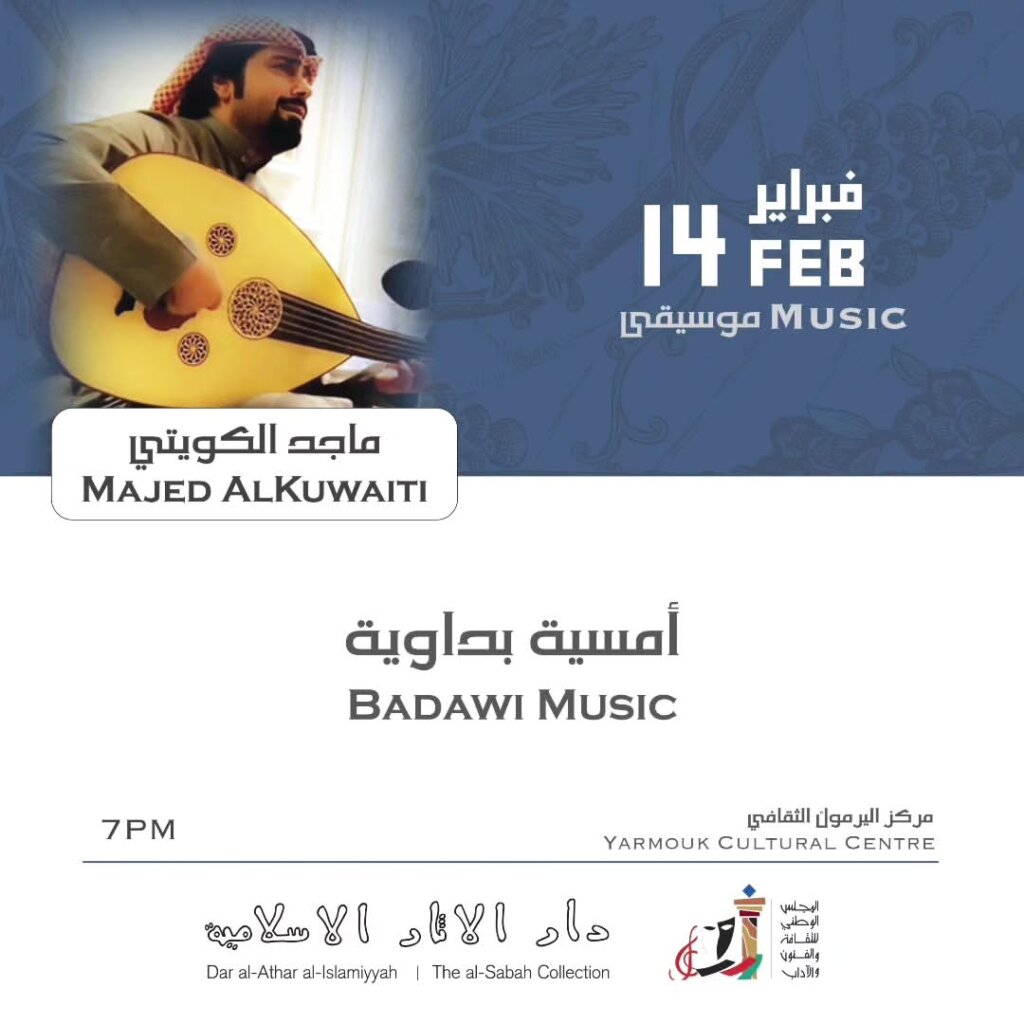
“Badawi Music” night performed by Majed al-Kuwaiti at YCC
Prof. Maria Shukri
In this workshop Maria allows participants to increase their words per minute speed exponentially without sacrificing comprehension. This skill is effectively used by professionals around the world.
Souraya Noujaim: Beyond frontiers: Connected stories of Islamic art
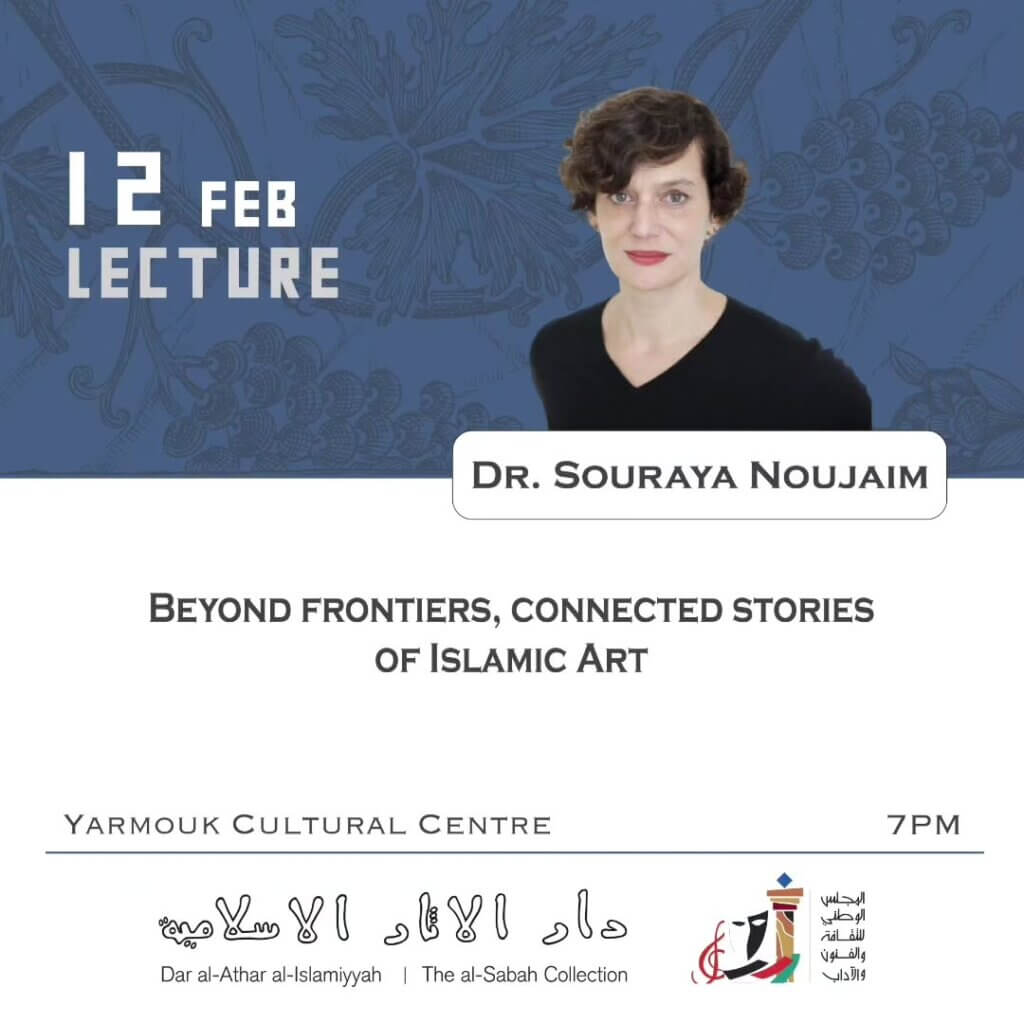
Souraya Noujaim
Dr. Souraya Noujaim is the Director of the Islamic Arts Department at Musée du Louvre in Paris, where she oversees the curatorial strategy and the development of its collection and narrative. Prior to this role, Dr. Souraya was the first appointed Scientific, Curatorial and Collections Management Director at Louvre Abu Dhabi. She has also been a key figure in driving the scientific aspects of international partnership programmes and has defined its research programmes along with supervising the creation of the museum’s scientific analysis laboratory.
Beyond frontiers: Connected stories of Islamic art
Recent research interests in mobility, transculturality, and their mirror effects on globality has brought new perspectives to the study of Islamic art. This has led to an increasing interconnection among the various disciplines of art history. The phenomena that globalisation and migration embrace today, are not recent. At each stage of history, globalisation draws a complex map featuring commercial, artistic, intellectual, and scientific migrations and exchanges. The purpose of this lecture is to discuss the cultural and commercial exchanges that linked Islamic art to the world, explored via the prism of objects, the vast networks of exchanges and influences that fuelled creative activities from East to West, for what they translate of assimilation and transformation of forms and iconography in Islam.
Mosaic of Marks Words Material “Reggio Children”
“Mosaic of Marks Words Materials” at the Yarmouk Cultural Centre in the presence of H.E the Ambassador of the Italian Republic to Kuwait, Lorenzo Morini, H.E the Secretary General of the National Council for Culture, Arts and Letters, Dr. Muhammad Khaled al-Jassar, and the Kuwait Foundation for the Advancement of Sciences representative Dr. Laila al-Moussawi, on behalf of the Director General of KFAS, Dr. Amina Rajab al-Farhan.
The exhibition-atelier presents the application of Reggio Children’s philosophy that brings children together to explore their interests in different aspects, materials, and arts.
Sheikha Intisar Salem Ali al-Sabah
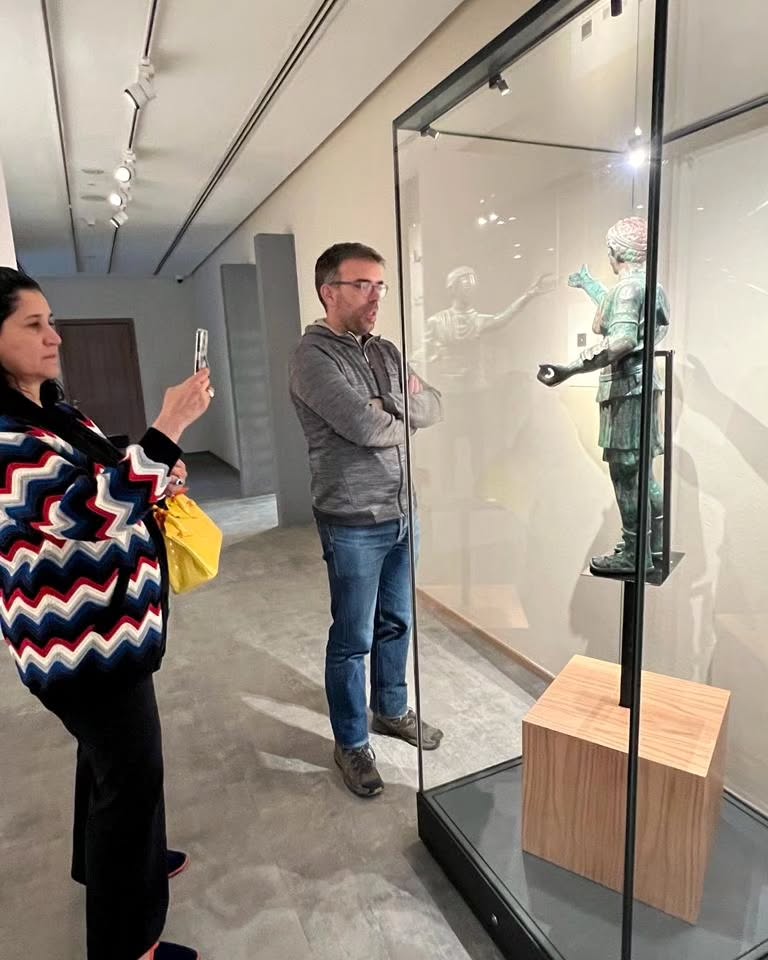
Sheikha Intisar Salem Ali al-Sabah and her guest Loic Pasquet visited the Amricani Cultural Centre Monday afternoon. They visited two exhibitions and the multi-media presentation “Story of Amricani.” While Sheikha Intisar is a frequent visitor, her guest enjoyed exploring the museum and discovering a bit of Kuwait history.
Alison Shan Price MBE: Dr Eleanor Calverley (1887-1968): Khatun Halima, the first Western lady doctor in Kuwait
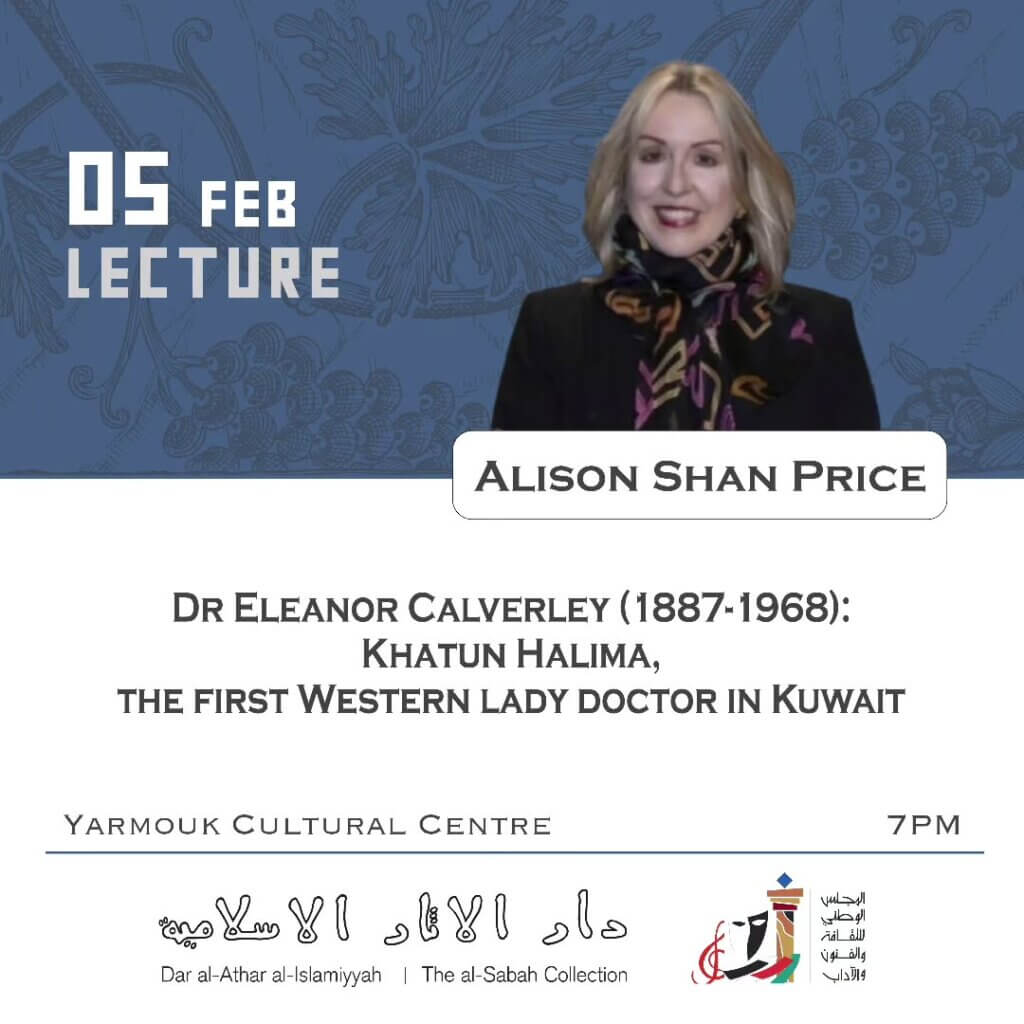
Alison Shan Price MBE
Fellow of the Royal Geographical Society FRGS
Alison Shan Price is the Founder and CEO of the multicultural One World Actors Centre and a historian specialising in the history of human narrative through interculturalism in the Middle East. It is at the centre of her academic research, presentations, bilingual and Living History productions, and workshops in Kuwait and the UK. This lecture is the seventh
in a series on the role of Western women travelling through, living and working in the pre-oil nineteenth and early twentieth century Near/Middle East.
Dr Eleanor Calverley (1887-1968): Khatun Halima, the first Western lady doctor in Kuwait.
Circa 1911, after the successes of the American Mission hospitals in Basra and Bahrain, a sister hospital was opened in Kuwait at the invitation of Sheikh Mubarak al Sabah, Mubarak the Great. Dr Eleanor Calverley was the Kuwait Mission’s first lady doctor. Travelling by donkey, in extreme conditions, to make house calls to women who could not come to the hospital or be seen by male doctors, she bridged the cultural gap between traditional healthcare and new Western medical methods. Dr Calverley opened a dispensary and, later, the first hospital for women on the site which is today the Dar al Athar al Islamiyyah Amricani Cultural Centre.
https://www.youtube.com/watch?v=Kjj2MvWD6Kw
Monya al-Eidan
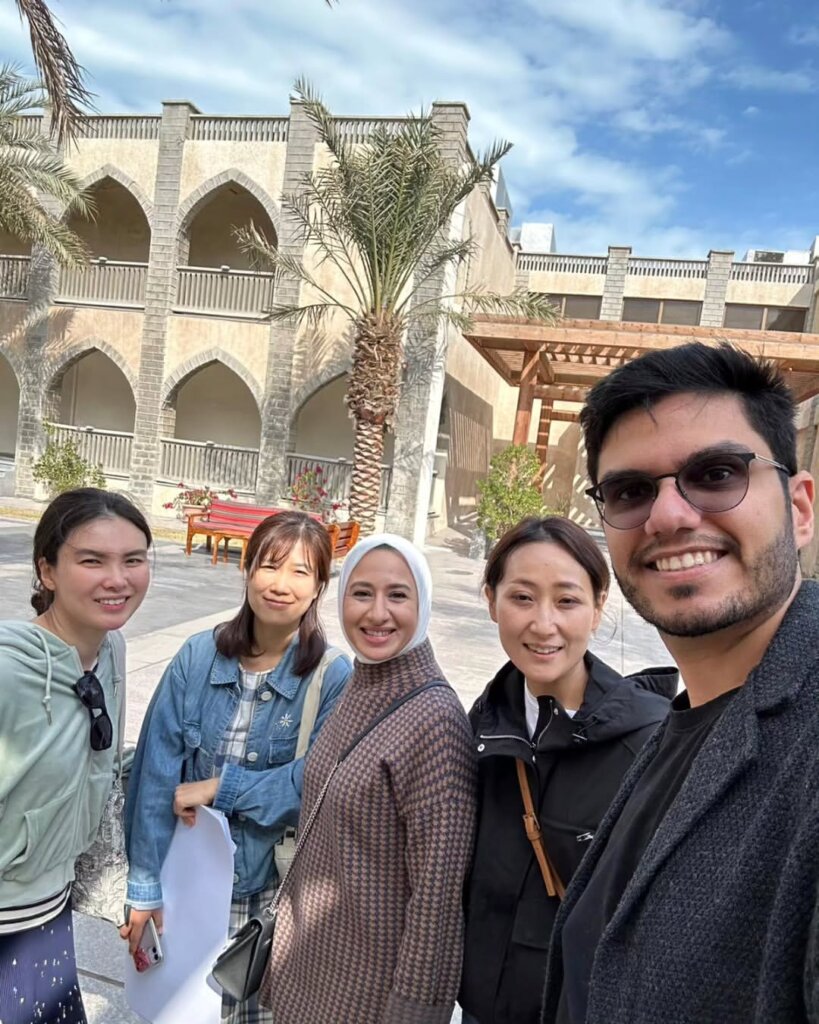
Engineer Monya al-Eidan and three guests from Korea visited the Amricani Cultural Centre on Thursday. A DAI volunteer docent explored the exhibitions with the guests.
د. حامد مطلق المطيري: الآثار المغمورة بالمياه جزئياً حول سواحل جزيرة فيلكا
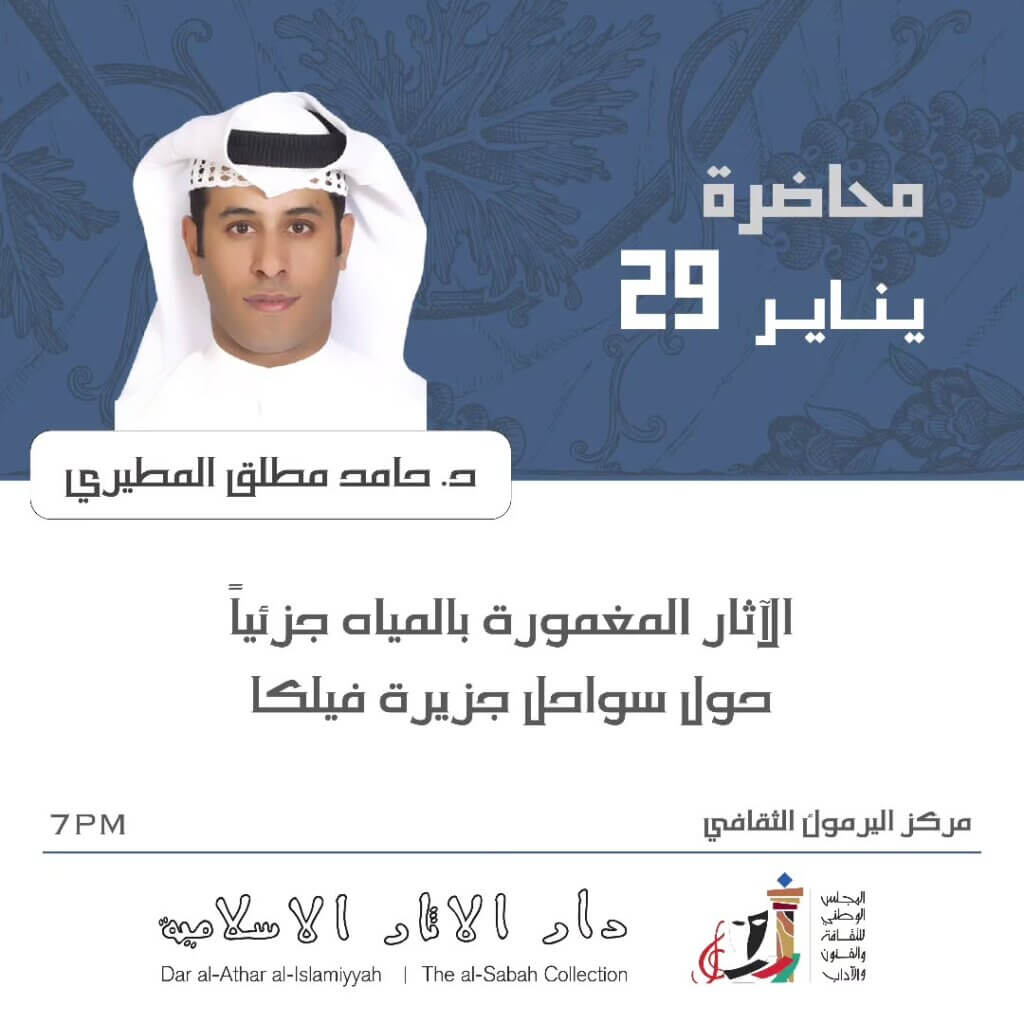
حامد مطلق محمد المطيري
دكتوراة في علم الاثار من جامعة الملك سعود . عضو في العديد من الجمعيات والاتحادات الآثارية بالسعودية ومصر و الكويت. باحث آثار سابق بإدارة الآثار والمتاحف- المجلس الوطني للثقافة والفنون والآداب بالكويت.رئيس فريق دول مجلس التعاون للتنقيب المشترك في جزيرة فيلكا وفي موقع الدور الاثـري بإمـارة ام العيون بدولة الامـارات المتحدة. له عدة مؤلفات في الفنون والمسكوكات الإسلامية ودراسات في التنقيبات الاثرية بدولة الكويت.
الآثار المغمورة بالمياه جزئياً حول سواحل جزيرة فيلكا
إ َّن من أقدم الإشارات التي تناولت جزيرة فيلكا بشكل واضح ومحدد هو ما جاء في مدونات الرحالة سترابو 64 Strabo ق.م – 19 م، حيث جاء ذكر اًلجزيرة تحت اسم إيكاروس Ikaros ، وهو الاسم الذي ربما كان تحريفالاسمأحدالمعابدالتياشُتهرتبهاجزيرةفيلكا،وهومعبدإيكارا في النصف الأول من الألف الأول ق.م، وقد أكدت الدراسات الآثارية الحديثة أهمية الجزيرة على طريق التجارة القديم، وخلال الدراسات الجيومورفولجية لجزيرة فيلكا اتضح أن ارتفاع منسوب المياه في حوض الخليج العربي أدى في الألف الثالث ق.م إلى غمر أجزاء واسعة من الجزيرة، وبعد انحسار مياه البحر تشكلت جزيرة فيلكا بشكلها الحالي في حدود نهاية الألف الثاني قبل الميلاد، وتتناول هذه المحاضرة الآثار المغمورة بالمياه جزئياً المكتشفة حديثاً في محيط جزيرة فيلكا وهي نتاج
أعمال مسح أثري تم خلال الفترة من 2013 حتى 2022.
https://www.youtube.com/watch?v=ZFvlP5_gwDE
Dr. Simon Rettig: Turning Prayers into Books: Compilations of Suras and Du‘as in the Central Islamic Lands between 1300 and 1750
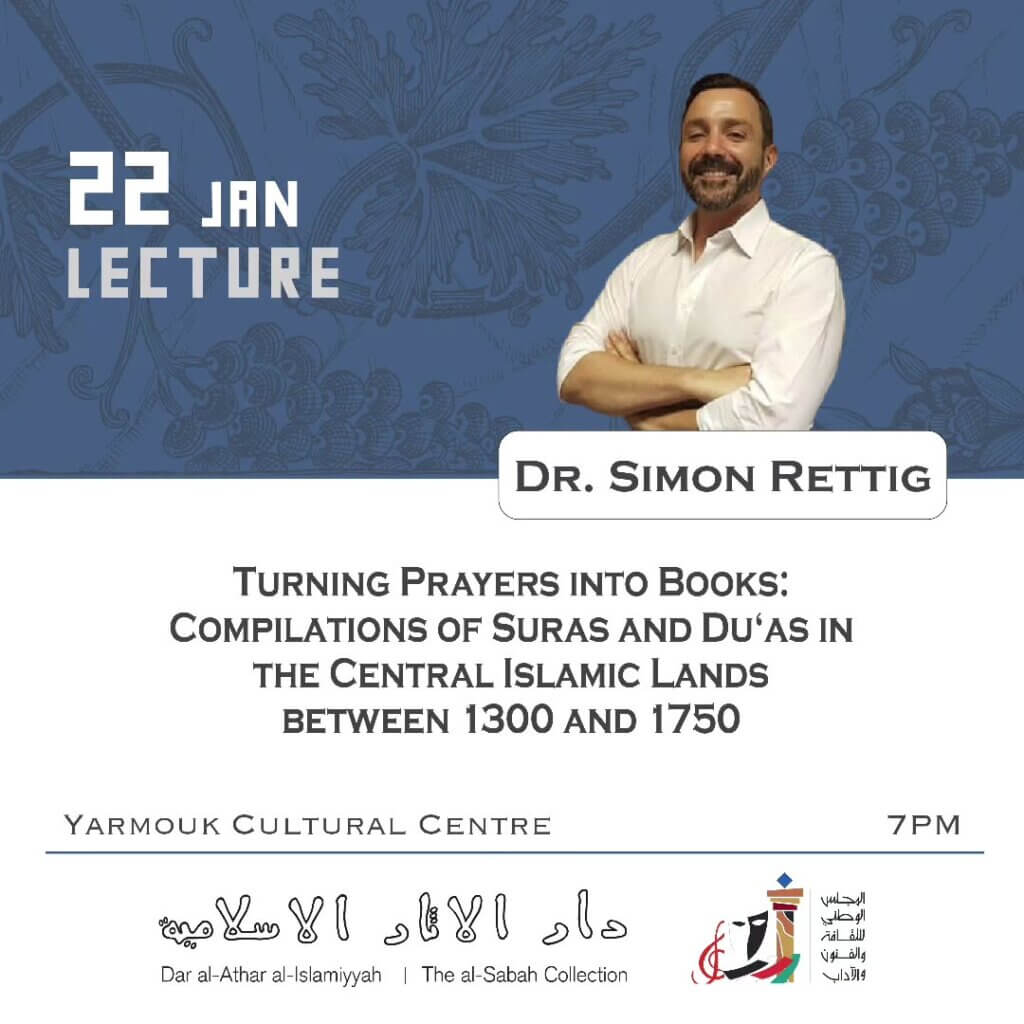
Dr Simon Rettig
Simon Rettig is associate curator for the Arts of the Islamic World at the Smithsonian’s National Museum of Asian Art in Washington, DC. Since he joined the museum in 2012, Rettig curated several exhibitions, including The Prince and the
Shah: Royal Portraits from Qajar Iran, and The Art of the Qur’an: Treasures from the Museum of Turkish and Islamic Arts. His current projects are an exhibition on the Great Mongol Shahnama opening in August 2024 and a monograph on the Freer’s celebrated manuscript of Nizami’s Khusraw u Shirin.
Turning Prayers into Books: Compilations of Suras and Du‘as in the Central Islamic Lands between 1300 and 1750
The fourteenth century (7th century of Hijra) witnessed the rise of a particular genre of religious book consisting of selected chapters (Sura) of the Qur’an, which could greatly vary from one copy to another. Initially associated with the ruling elite, such compilations of suras began to circulate by the sixteenth century in wider social and religious circles, both for private and public devotional use. This talk introduces the development and evolution of compendiums of prayers in the Arab heartland, Turkey, and Iran from their inception in late Il-Khanid and Jalayirid Baghdad to their apex in Ottoman Istanbul and late Safavid Isfahan. They present an astonishing variety of content, format, and style and their distinctive identities – regional, sectarian, and visual—offer invaluable insight into religious practices in the early modern period.
https://www.youtube.com/watch?v=xWLrXYgsQrY
Michele Zini: Architecture and Pedagogy in Dialogue
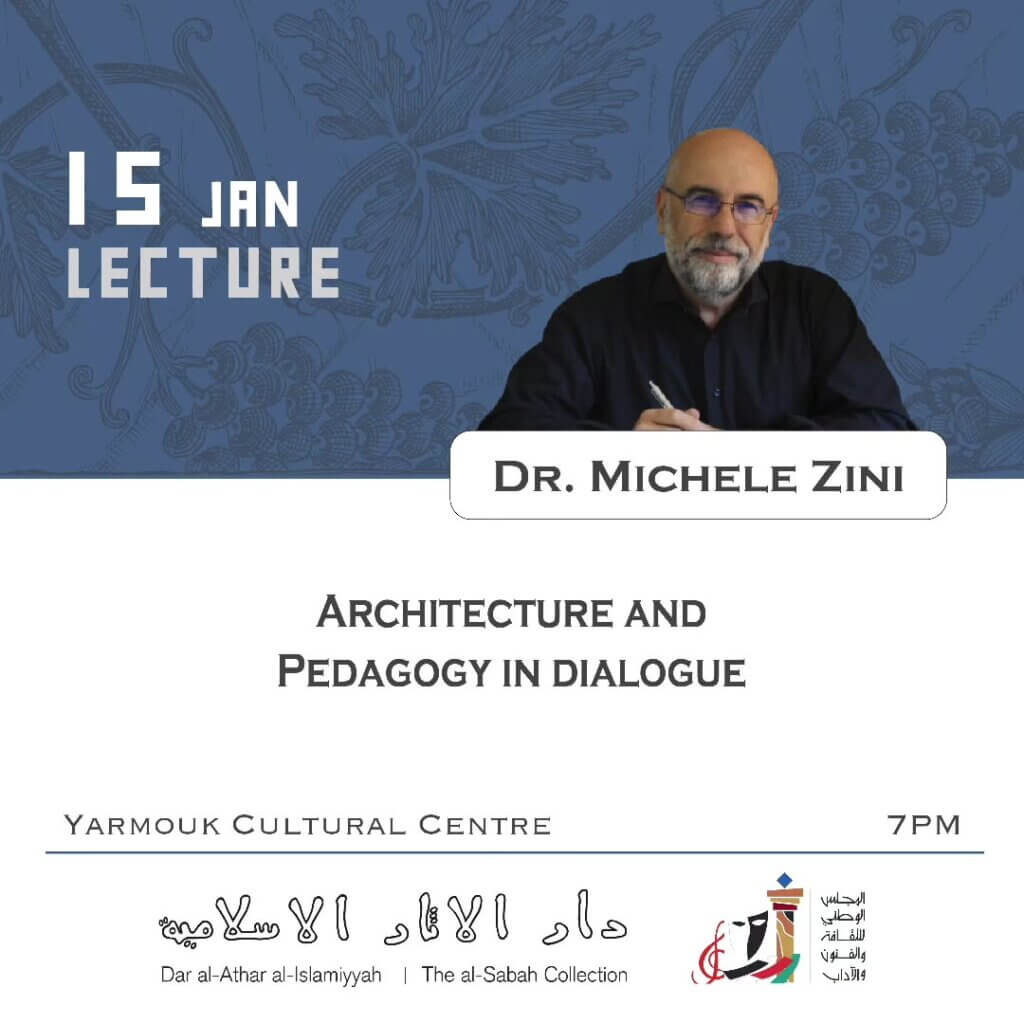
Michele Zini
Architect and co-founder of ZPZ Partners, Michele Zini is a specialist in education environments. He is also a contract professor at Design Faculty, Milan Polytechnic Institute. ZIni works closely with Reggio Children and INDIRE (Italian Ministry of Education), where he is involved with research and project development. He carries out professional work with ZPZ Partners, in architecture and interior design, in Italy and abroad (San Francisco, Tokyo, Emirates, Washington DC, London), with focus on the design of schools and learning environments.
Architecture and Pedagogy in Dialogue
Architecture and pedagogy in dialogue are powerful tools to support innovative education. The environment, which we take to be the total of spatial and sensory qualities including architecture itself, can determine the nature of the pedagogical project. New technologies imply new spaces for learning; the schools must change. The classrooms become home bases that are part of a more complex organism: a must-be beautiful and nurturing place. I will share design guidelines using our education projects in ZPZ Partners as case studies, from the book “children, spaces, relations – a metaproject for the environment for young children” and the work adventures with Reggio Children to the recent new design guidelines for the school of the future written for INDIRE/ italian Ministry of Education.
https://www.youtube.com/watch?v=ZCxR_ZL2V-Y